Aleph Beta Logo
LOG IN
Start Free TrialGo to Library
Your browser does not support the video tag.

In-Depth Online Torah Learning for Adults

Discover meaning in mitzvot, connect to God, and feel the Torah's relevance in your life.

Fall in love with Torah - for the first time, or all over again - with Aleph Beta’s over 1,000 beautifully produced Torah videos, podcasts, and printable Torah learning guides - all online.

Fall in love with Torah - for the first time, or all over again - with Aleph Beta’s over 1,000 beautifully produced videos, podcasts, and printable guides.

LIMITED TIME OFFER

Start the new cycle with

the complete Parsha Companion set.

Discover new ideas on familiar stories in the weekly Torah reading

Buy Now!

LIMITED TIME OFFER

Start the new cycle with

the complete Parsha Companion set.

Discover new ideas on familiar stories in the weekly Torah reading

Buy Now!

Parshat Noach Videos

Why a Flood, of All Things?

Why a Flood, of All Things?

Animated Video • 12 mins 45 secs

This week’s parsha tells us about an epic event: the flood that God sends to destroy the earth. But we never stop to ask... why did God decide to send a flood, of all things?

Interestingly, only last week, in the story of the creation of the world, we talked about all these same elements – deep waters, winds of God, and more. For some reason, the flood’s aftermath, the recreation of the world, mirrors the original creation in the Torah – but why? What is it we’re meant to learn from the flood??

The intriguing repetitions may change the entire way we think about the story of Noah and why God decided to flood the earth.

Watch more: Genesis Unveiled

Why Aren't Dinosaurs In The Torah?

Why Aren't Dinosaurs In The Torah?

Animated Video • 7 mins 37 secs

Or wooly mammoths? Or other prehistoric creatures? If we’re trusting the Torah to tell us the story of creation, how could it leave out such a large (pun intended) part of history? Does this mean Torah and science are at odds?  Rabbi Fohrman argues that if we’re asking this question, it means we’re misunderstanding something fundamental about the nature of the Torah. Watch this video to learn what the Torah is – and what it isn’t.

The Failure Of Humanity

The Failure Of Humanity

Animated Video • 15 mins 11 secs

After the flood, God put a rainbow in the sky and made a covenant with Noah to never destroy the earth with water again. It sure sounds nice… but there’s actually something very strange about God's promise.

God had brought the flood because humanity had become sinful beyond repair. So what if that ever happens again? What if we, Noah’s descendants, become just as sinful as our predecessors? Will God keep His promise not to flood the earth again? And if so, why? These are the questions that David and Imu tackle in this video.

In their search for an answer, they uncover a series of stunning textual parallels between the story of the flood and another earlier account in the Torah. This video may well change the way that you understand how God relates to humankind, and how that has changed from Noah’s generation to ours.

Dig Deeper:

  • For more on Noach, click here.

  • For more on Noah and the flood, click here.

Want More? Help us grow and support what we do.
Join our growing community!

Welcome to Aleph Beta!

Discover your Torah library

Browse full library >

Parsha

  • Noach: Why a Flood, of All Things?

  • Lech Lecha: Why Did God Choose Avraham?

  • Vayera: A Troubling Story of "Kindness"

  • Chayyei Sara: What Makes for an Extraordinary Life?

  • Toldot: Esau Had the Means and the Motive. Why Didn't He Kill Jacob?

See more >

Holidays

  • The Spiritual Meaning of Hanukkah

  • Why Do Jews Celebrate Hanukkah?

  • The Hanukkah That Might Have Been

  • Is Hanukkah Like Christmas?

  • Who are the Maccabees?

See more >

Understanding Mitzvot

  • Why Does the Mikvah Make Me Pure?

  • Kashrut: What Does God Have Against Cheeseburgers?

  • Did God Really Need to Rest? Shabbat's Role in Judaism

Understanding Tanach Stories

  • The Garden of Eden

  • The Expulsion of Ishmael

  • Jacob's Ladder

  • The Golden Calf

  • The Sin of the Spies

  • Iyov (Job)

See more >

Deep Dive Courses

  • Genesis Unveiled: An Epic Adventure through the early Bereishit Stories

  • Abraham's Journey: A Deep Dive into all the Avraham Stories

  • Jacob Man of Truth: A New Perspective on Yitzchak, Rachel, Yaakov, and Eisav

  • Methodology: Learn How to Read the Torah

Big Questions

  • Why Does Judaism Have a Written and Oral Law?

  • What is so Revelatory About the 10 Commandments?

  • What is the Meaning of Life

  • Why Does our Torah Contain Laws that Seem to Promote Slavery?

  • How Can we Respond to the Charges of Biblical Criticism?

Prayer

  • Understanding Shacharit

  • Understanding Shabbat Prayers

  • Understanding Hallel

  • Hannah's Prayer: How to Get Close to God

  • Understanding Eishet Chayil

  • Why is it Important to Pray?

How to Read Torah

  • Understanding the Genre of Torah

  • Intertextuality and Chiasms - How the Torah Encodes Meaning

  • How Our Stories Become Our Laws - The Surprising Relationship Between the Narrative and Legal Sections of the Torah

Personal Growth

  • How to Heal a Broken Relationship

  • Why Does Honoring Our Parents Lead to Us Meriting a Long Life?

  • Do I Have to Get Along with Everyone?

  • What Can We Learn from Moses' Humility?

Parsha

  • Noach: Why a Flood, of All Things?

  • Lech Lecha: Why Did God Choose Avraham?

  • Vayera: A Troubling Story of "Kindness"

  • Chayyei Sara: What Makes for an Extraordinary Life?

  • Toldot: Esau Had the Means and the Motive. Why Didn't He Kill Jacob?

See more >

Holidays

  • The Spiritual Meaning of Hanukkah

  • Why Do Jews Celebrate Hanukkah?

  • The Hanukkah That Might Have Been

  • Is Hanukkah Like Christmas?

  • Who are the Maccabees?

See more >

Understanding Mitzvot

  • Why Does the Mikvah Make Me Pure?

  • Kashrut: What Does God Have Against Cheeseburgers?

  • Did God Really Need to Rest? Shabbat's Role in Judaism

Understanding Tanach Stories

  • The Garden of Eden

  • The Expulsion of Ishmael

  • Jacob's Ladder

  • The Golden Calf

  • The Sin of the Spies

  • Iyov (Job)

See more >

Deep Dive Courses

  • Genesis Unveiled: An Epic Adventure through the early Bereishit Stories

  • Abraham's Journey: A Deep Dive into all the Avraham Stories

  • Jacob Man of Truth: A New Perspective on Yitzchak, Rachel, Yaakov, and Eisav

  • Methodology: Learn How to Read the Torah

Big Questions

  • Why Does Judaism Have a Written and Oral Law?

  • What is so Revelatory About the 10 Commandments?

  • What is the Meaning of Life

  • Why Does our Torah Contain Laws that Seem to Promote Slavery?

  • How Can we Respond to the Charges of Biblical Criticism?

Prayer

  • Understanding Shacharit

  • Understanding Shabbat Prayers

  • Understanding Hallel

  • Hannah's Prayer: How to Get Close to God

  • Understanding Eishet Chayil

  • Why is it Important to Pray?

How to Read Torah

  • Understanding the Genre of Torah

  • Intertextuality and Chiasms - How the Torah Encodes Meaning

  • How Our Stories Become Our Laws - The Surprising Relationship Between the Narrative and Legal Sections of the Torah

Personal Growth

  • How to Heal a Broken Relationship

  • Why Does Honoring Our Parents Lead to Us Meriting a Long Life?

  • Do I Have to Get Along with Everyone?

  • What Can We Learn from Moses' Humility?

Become a Member

Let us introduce ourselves

Rabbi Fohrman Our lead scholar

Rabbi David Fohrman is the founder and lead scholar at Aleph Beta. Over the last two decades, he’s pioneered a way of reading Biblical text that feels both rigorous and revelatory. Through Aleph Beta, he’s given expression to that, developing what is now a vast library of content, spanning all types of media: animated videos, podcasts and books. He’s also embarked on an effort to train a team of Torah scholars adept at the close-reading methodology he’s pioneered – and their work can be found at Aleph Beta, too.

Prior to his founding of Aleph Beta, Rabbi Fohrman served as a senior editor and writer for the ArtScroll Talmud Project. He also taught Biblical themes as adjunct faculty at Johns Hopkins University, where he had earlier received a Master’s degree in Western intellectual history. Rabbi Fohrman received his rabbinical and Talmudic training at the Ner Israel Rabbinical College, but some of his earliest and most profound exposure to Biblical text analysis came from his encounters with Rabbi Yosef Leibowitz, in his childhood years in Northern California. 

FAQ and read more about Aleph Beta

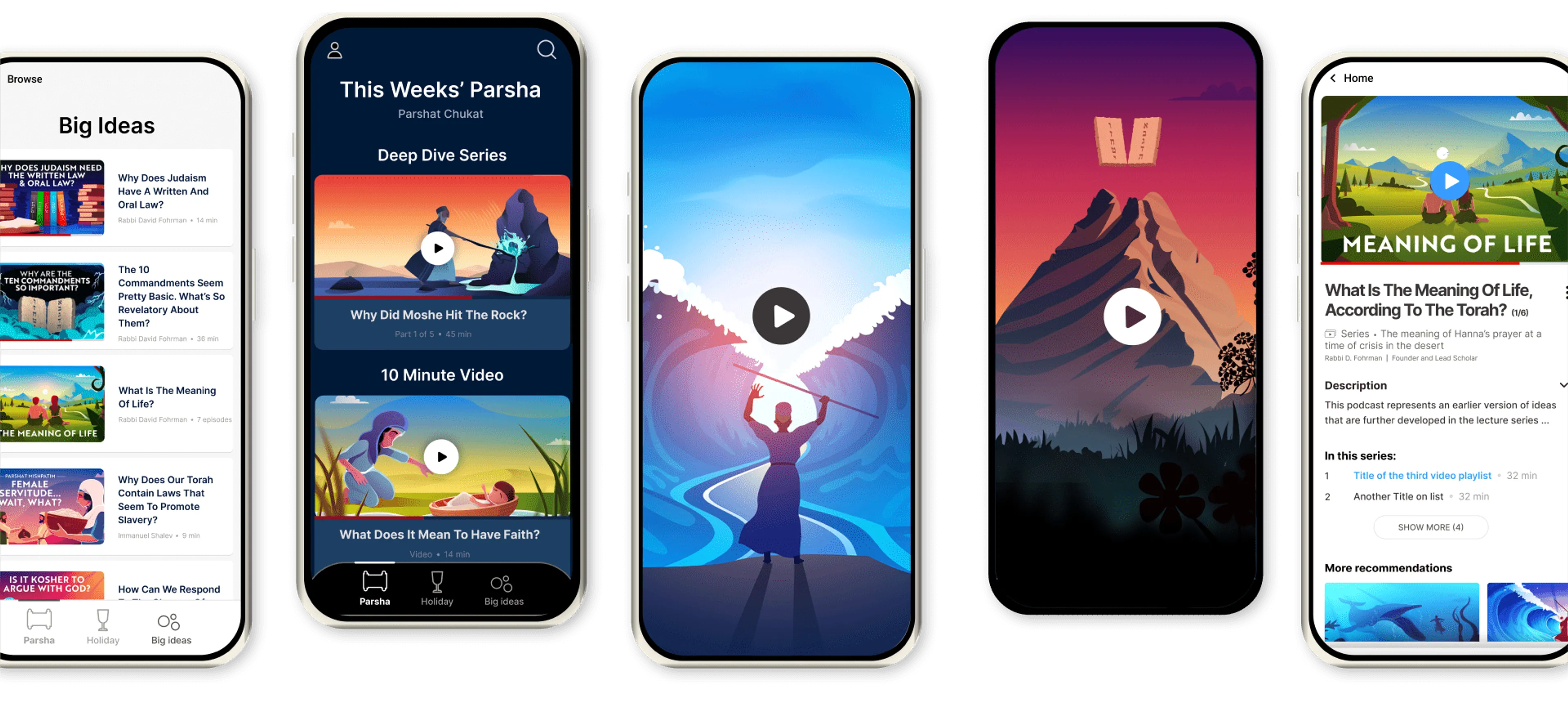
Take Torah learning on the go with the Aleph Beta app

Watch videos, listen to podcasts, and explore our full library anywhere.

Get it on Google PlayDownload on the App Store

Get Started

Start Free Trial

Stay Connected

Follow Aleph Beta on social media

InstagramTikTokFacebookYouTubePodcastsSpotify

About Us

  • About
  • Careers

Our Team

  • Team

Get Help

  • Contact

Support Us

  • Subscribe
  • Educators
  • Shop
  • Donate
AlephBeta Logo

A Nonprofit Media Company helping people closely read the Torah to discover its beauty, meaning and relevance

Cookies Policy
Legal Terms
Privacy Policy

© 2026 Aleph Beta. All rights reserved.

HomeSearchProfile