Tisha B’Av: What Is Baseless Hatred?
Teacher/Parent Guide: The Story of Kamtza and Bar Kamtza
By Danielle Resh | 10 July 2025 | 4 Minute Read
Introduction
This guide corresponds to the video series: Tisha B’Av: Baseless Hatred, and is designed for parents or teachers to use along with children. Below, you’ll find our specially edited "kids version" of the series, summaries explaining the major concepts and events of each video in the series, as well as discussion questions intended to further comprehension.
By the way, you can find the original, full-length version of the series here. It's content is also family friendly, but it runs a little longer and goes a little deeper than the "kids version" below.



Introduction: What is Sinat Chinam?
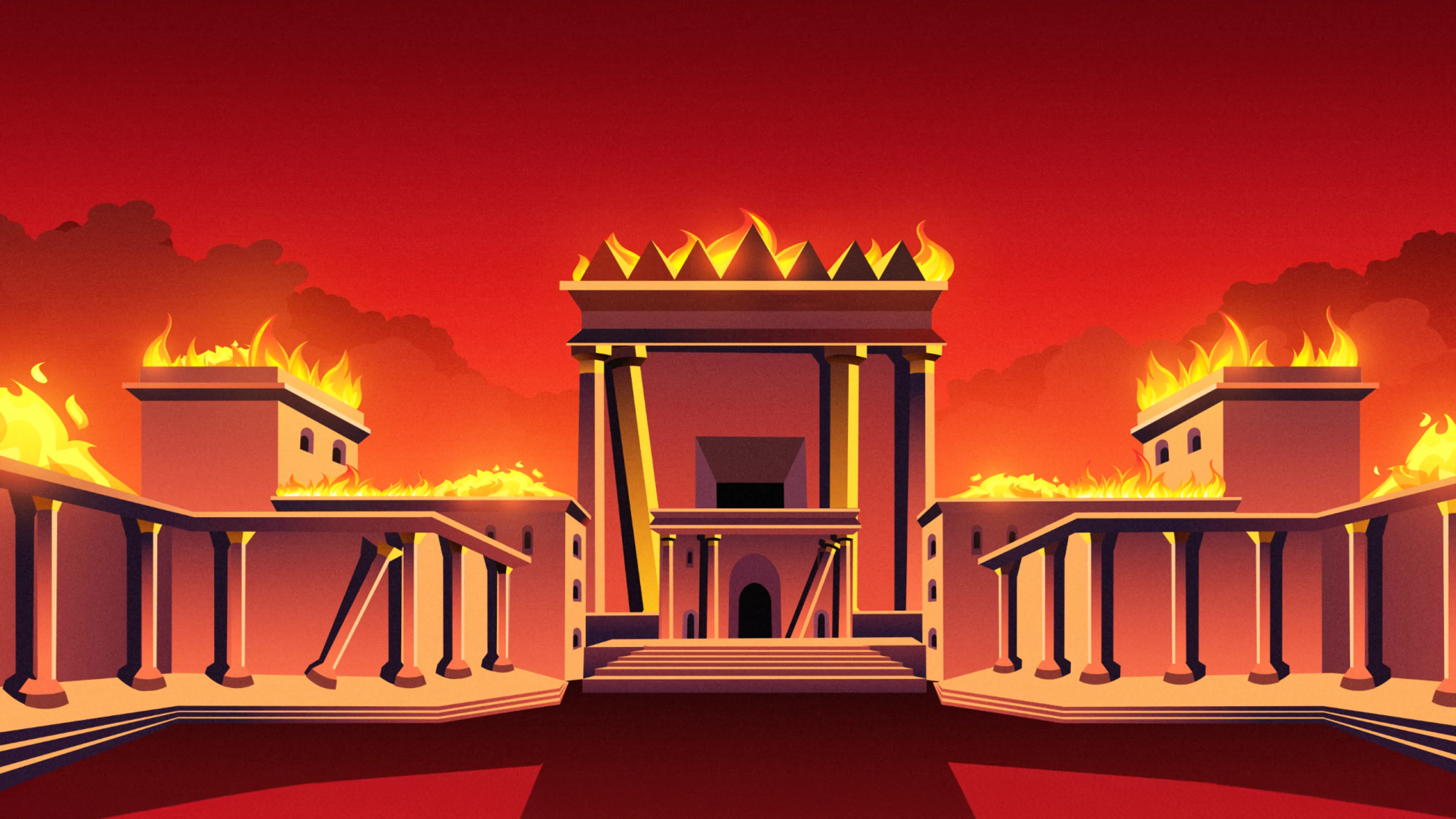
On Tisha B’Av, we mourn the destruction of the Holy Temple in Jerusalem. The Talmud says that the Temple was destroyed because of “baseless hatred,” or hating someone for absolutely no reason. But what does hating someone for no reason mean? Most of us have a reason for not liking someone. For example, if someone bullies you at school every day, you might start to hate them. Does that count as hating someone for no reason?
The Talmud tells us a story to show us what “baseless hatred” actually means. In the story, we will see how easily our anger can get out of control, and how dangerous it can be when our anger leads to hatred. We’ll start to learn how we can control our anger so that we can fight against any hatred we might feel in our own hearts.
Kamtza & Bar Kamtza
Character List
- The Feast-Thrower - the nameless man who hosts a dinner party; he has a friend named Kamtza and an enemy named Bar Kamtza
- Kamtza - the feast-thrower’s friend who was supposed to be invited to the party; he never actually appears in the story
- Bar Kamtza - the feast thrower’s enemy who accidentally gets invited to the party (and then kicked out)
- Rabbis - the greatest rabbis of the time are all at the feast-thrower’s party
- Roman Leader of Jerusalem - the nameless man who rules over Jerusalem and tries to send an offering to the Temple when he hears a rumor that the Jews are rebelling
Kamtza and Bar Kamtza
The Talmud tells us that Jerusalem was destroyed because of the story of “Kamtza and Bar Kamtza.” All of Jerusalem was destroyed because of one little incident? That’s a big claim! So what actually is the story of “Kamtza and Bar Kamtza,” and how did it cause Jerusalem to be destroyed?
Here’s how the story goes: in the land of Israel, there was a man who had a friend named Kamtza and an enemy named Bar Kamtza. One day, this man decides to throw a huge feast. He invites everyone he knows, including all of his friends and all of the famous rabbis. He tells his servant to deliver a special invitation to his good friend, Kamtza. However, his servant makes a mistake! Instead of delivering the invitation to the feast-thrower’s friend, Kamtza, the servant gives the invitation to the feast-thrower’s enemy, Bar Kamtza. (After all, their names are so similar! It’s an honest mistake!)
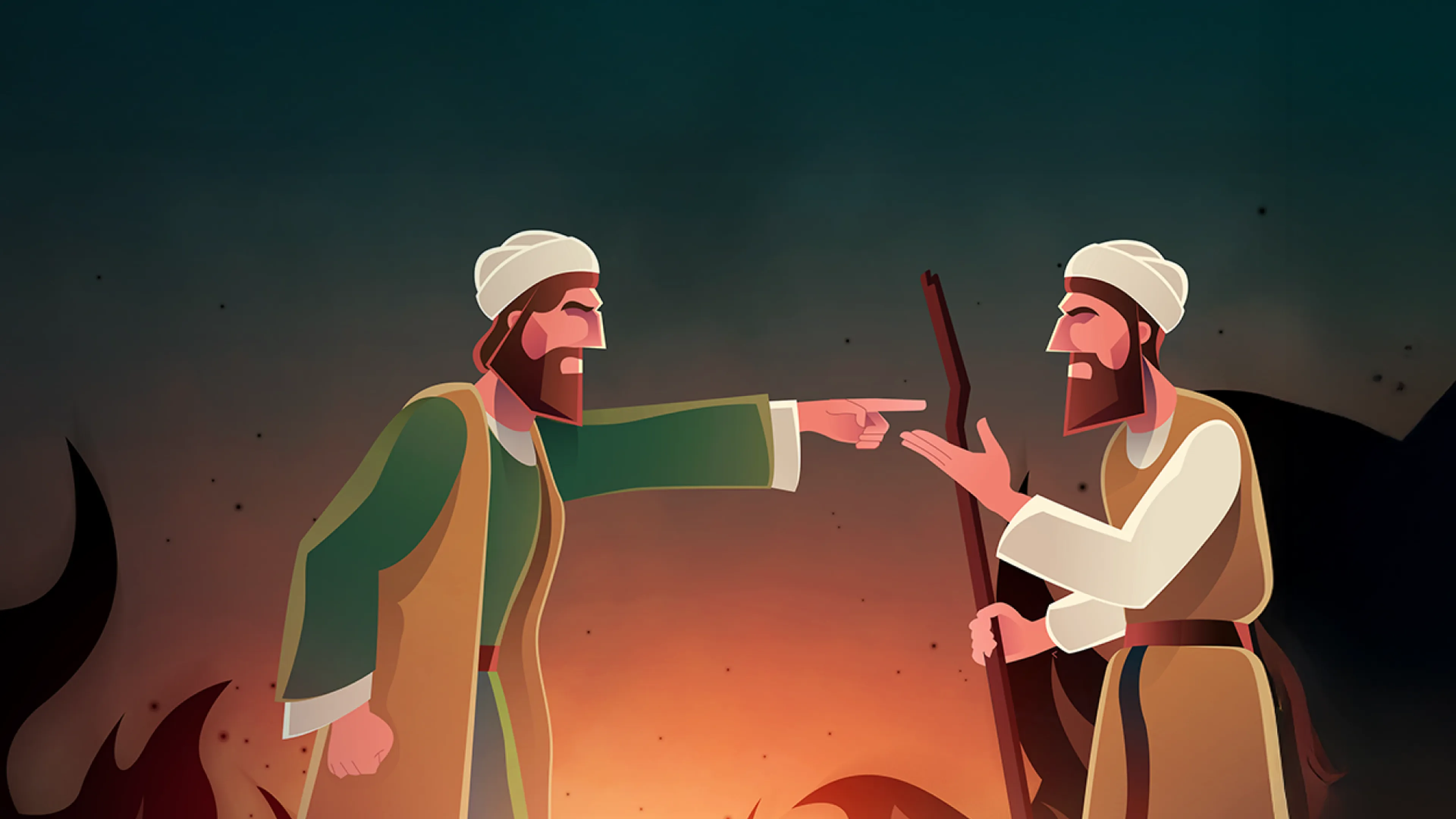
It’s time for the feast. The feast-thrower is walking around the room, greeting all of his guests. He’s happy to see his friends and the rabbis enjoying themselves. Suddenly, his eye catches on something that makes him very angry – there at one of the tables is his enemy, Bar Kamtza! (Now, we don’t know why the feast-thrower and Bar Kamtza are enemies, but we can assume they really don’t like each other). The feast-thrower marches over to Bar Kamtza and yells, “What are you doing here? Leave!”
Bar Kamtza looks around, embarrassed. The entire town is there! He doesn’t want to be thrown out in front of everyone. So he pleads with the feast-thrower, “Please, I’ll pay for my food and drink, if you just let me stay.” But the feast-thrower is still furious, and he refuses. Bar Kamtza keeps pleading, offering more and more until he has offered to pay for the entire feast! Still, the feast-thrower refuses and throws Bar Kamtza out of the feast, as the rest of the guests watch in silence.
Bar Kamtza’s Revenge
After the feast-thrower throws him out of the party, Bar Kamtza is pretty angry. What makes him really angry is that all of the rabbis were at the party, but no one stood up for him or spoke out on his behalf when he got thrown out! Bar Kamtza feels like getting revenge. He starts thinking about how he can hurt the rabbis just like they hurt him.
At the time, the Romans controlled the land of Israel. Bar Kamtza comes up with a sneaky plan. He goes to the Roman leader of Jerusalem and tells him a lie: “The Jews of Jerusalem are rebelling against you!”
The Roman leader isn’t sure whether to believe him. “How do I know that what you are saying is true?”
“Send a gift to the rabbis– an animal for them to sacrifice in their Holy Temple. See if they accept the gift. If they don’t accept it, you’ll know they’re rejecting you and rebelling against you!” Bar Kamtza responds.
So the Roman leader does exactly that. But little does he know, before the animal is delivered to the rabbis at the Temple, Bar Kamtza injures it, making it impossible for the rabbis to sacrifice it. After a lot of deliberation, the rabbis turn down the gift– they aren’t willing to offer up a sacrifice that goes against Jewish law, though they fear the Romans’ response. Bar Kamtza tells the Roman leader that the Jews did in fact refuse his gift. The Romans figure this means that the Jews are rebelling against them. And the Romans…well, they’re ANGRY. So angry, in fact, that they gather up their army and decide to go attack Jerusalem.
Managing Our Anger Levels
Sometimes, it’s really hard to let go of our anger when we feel that we’re right, and the person who hurt us is wrong. While the stories of the feast-thrower and Bar Kamtza seem extreme, it’s not that difficult to think about ourselves getting so angry that we hurt others. Maybe if we can figure out where this harmful anger comes from, we can learn how to control it. We have two instincts inside ourselves that can help us control our level of anger:
- Reaction Thermostat - You can imagine that all of us have a thermostat inside of our heads. Our thermostat helps us figure out how angry or upset we should be in different situations. For example, if we’re standing in line and someone cuts us, we might get a little bit annoyed. We might tell the person to get back in their place in line. Maybe that’s not the nicest response, but that amount of anger seems reasonable. What wouldn’t be reasonable? If we start to scream and hit the person who cut us in line. That would be an overreaction. Usually we can trust our thermostat to help us avoid overreacting.
- Fact Checker - If we feel angrier than we should be for the situation, then we have another instinct that can help us calm down – our fact-checker. Sometimes we react to a situation out of anger, but then when we calm down and realize what’s actually going on, we feel less angry. For example, maybe you’re angry because your best friend is ignoring you all day on your birthday. But then, in the afternoon, you come home to a surprise party! You realize your best friend has been ignoring you because she didn’t want to spoil the surprise. You might still feel a little hurt that she ignored you earlier, but you’re not so angry anymore, because now you understand the reason behind what she did. Often, when we learn more facts and we see that there’s no reason to be so angry, we can let go of, or temper, our anger.
Usually, these two instincts help us to keep our anger in check. But sometimes they’re not enough! In those rare times, we get even angrier and it’s even harder to calm down. We are way angrier than we should be, but we often don’t even realize that our anger level is out of control.
Losing Control Of Anger
Knowing what we now know about how anger works and how our instincts can help us control it, let’s go back to the story of Kamtza and Bar Kamtza and see if we can figure out what went wrong.
We don’t know why the feast-thrower is so angry at Bar Kamtza. Maybe Bar Kamtza was mean to him in the past. Maybe Bar Kamtza excluded the feast-thrower from a party, and now the feast-thrower is trying to get back at him. Whatever it is, it’s clear that the feast-thrower is hurt by and angry at Bar Kamtza.
So then when the feast-thrower sees Bar Kamtza at his party, what do you imagine he might be thinking? He doesn’t know that his servant invited Bar Kamtza by mistake. He figures that Bar Kamtza is trying to ruin his party! And that makes him REALLY angry! And yeah, if that were true, it would make sense for the feast-thrower to feel angry, even if it’s not the nicest feeling.
But at some point, when the feast-thrower sees that his friend, Kamtza, is missing, he realizes there must have been some sort of confusion with the invitations. We would expect him to feel a little annoyed at his servant for the mixup – and sure, maybe also a little angry with Bar Kamtza for whatever reason the two were enemies in the first place. But instead of using his fact-checker instinct to tone down his anger after he realizes what actually happened, the feast-thrower becomes even angrier at Bar Kamtza. He takes all of his anger about the situation out on Bar Kamtza and acts cruelly to him. His “Reaction Thermostat” doesn’t kick in to tell him that his level of anger is too high. His “Fact Checker” doesn’t work to control his anger either. And now, his anger is so big that it’s very hard to control. That kind of anger is like fire. It spreads quickly and it burns anyone in its path. And now it has burned Bar Kamtza.
Now let’s switch to Bar Kamtza’s point of view. Maybe he had come to the party to make up with his long-time enemy. Maybe he had come just to enjoy the company of others. But now he’s been thrown out, humiliated publicly, and he’s really mad. It would kind of make sense for Bar Kamtza to be upset with the feast-thrower – after all, the feast-thrower is the one who threw him out of the party. But instead, Bar Kamtza takes that anger and directs it at the rabbis. He gets SO angry, in fact, that he betrays them to the Romans, putting the entire Jewish people and all of Jerusalem in danger! His “Reaction Thermostat” has failed; he’s waaaay angrier than he should be for the situation. His “Fact Checker” has failed too – he can’t see any reason for the feast-thrower’s reaction, or the rabbis’ lack of reaction. The angry fire spreads from one person to another, and it destroys everything in its path.
Ending Baseless Hatred
The story of Kamtza and Bar Kamtza give us insight into what “baseless hatred” actually means. It doesn’t mean that our anger is entirely baseless, that it came completely out of nowhere. It means being way too angry about whatever wrong was done to us. It means not being able to control our level of anger and letting that anger harm both others and ourselves.
Most of the time when something makes us angry, we are able to control our anger and not overreact. Our “Reaction Thermostat” kicks in to keep our anger at a reasonable level, and our “Fact-Checker” helps widen our perspective so we can understand the reason behind whatever or whoever made us angry. But sometimes, we do overreact. And that overreaction can lead to a dangerous cycle of anger and hate. Soon enough, we’re taking out our anger on people who don’t deserve it. For example, let’s say your mom’s boss yells at her at work. She comes home, upset, and yells at you. Then, you yell at your brother. It’s a cycle of anger and hate.
When we feel ourselves getting to that place where anger starts to overwhelm us, we need to not just rely on our instincts to stop us from overreacting– because, as we’ve seen in the story of “Kamtza and Bar Kamtza,” sometimes, our “Reaction Thermostat” and “Fact-Checker” can fail. We also need to use our brains to help us pause, step back, and ask: “Is it right for me to feel this angry? What am I really feeling upset about?” Once we figure out what we’re actually angry about, we can deal with our anger calmly and maturely. It’s natural to feel upset or angry sometimes; but we have to control our level of anger before it causes harm. If we do that, we can protect both ourselves and each other from the dangers of anger and hate.
Browse the Whole Tisha B'Av Collection










Let us introduce ourselves
Not just a bunch of videos — a different relationship with Torah



Rabbi Fohrman
Our lead scholar
Rabbi David Fohrman is the founder and lead scholar at Aleph Beta. Over the last two decades, he’s pioneered a way of reading Biblical text that feels both rigorous and revelatory. Through Aleph Beta, he’s given expression to that, developing what is now a vast library of content, spanning all types of media: animated videos, podcasts and books. He’s also embarked on an effort to train a team of Torah scholars adept at the close-reading methodology he’s pioneered – and their work can be found at Aleph Beta, too.
Prior to his founding of Aleph Beta, Rabbi Fohrman served as a senior editor and writer for the ArtScroll Talmud Project. He also taught Biblical themes as adjunct faculty at Johns Hopkins University, where he had earlier received a Master’s degree in Western intellectual history. Rabbi Fohrman received his rabbinical and Talmudic training at the Ner Israel Rabbinical College, but some of his earliest and most profound exposure to Biblical text analysis came from his encounters with Rabbi Yosef Leibowitz, in his childhood years in Northern California.
It doesn’t end with the fast
Tisha B’Av brought you here. Membership will get you through the year.
This one day might have brought you to Aleph Beta — but there’s so much more waiting for you to discover. Close, beautiful readings of the text, ready for every Shabbos and every chag. Designed to fit seamlessly into your life.




Show up to Shabbos with something to say
Walk into the meal with a fresh insight on the parsha — the kind that makes the table lean in.

Walk into every holiday prepared
Seder prep, Megillah, the Yamim Noraim, Tisha B'Av — arrive spiritually ready instead of scrambling.

Ask the hard questions — and find real answers
The troubling stories, the never-ending lists of names. Read God's book cover to cover without skipping the "boring" parts or avoiding the challenging ones.
support the mission. get everything.
Choose a plan
Subscriptions renew automatically. Cancel anytime.
Aleph Beta is free for anyone who can't afford it. Request a scholarship.
Already a member? Log in

And it all fits in your pocket
Learn on the train, in the kitchen, on a walk — the whole library in the Aleph Beta app.


Why do you charge for Torah?
Well...Aleph Beta is a nonprofit. But we don’t do a lot of fundraising — no galas, no appeals, no ads. Instead, we turn to you, the people we actually serve, and ask for your partnership. So don’t think of membership as a fee. Think of it as a small monthly donation to support the scholars, editors and animators who make this Torah. That said, money should never be the reason you can’t learn. If the price is a barrier — for any reason, in any season of life — Aleph Beta is free for you. No application essay, no proof, no awkward conversation.
Those who can, carry those who can’t.
it’s genuinely no problem
“I have not come across an organization that treats its members with such kindness. Thank you from the bottom of my heart.”
— SARAH, member since 2019
Don't sit with the day alone.
Join Aleph Beta, and let this Tisha B'Av actually mean something.
Cancel anytime · scholarships always available