The Book of Lamentations (Megillat Eicha)
Explanations to Help You Connect to Tisha B'Av
By Sarah Rashba | 10 July 2025 | 5 Minute Read

Megillat Eicha: Explanations to Help You Connect to Tisha B'Av
As Tisha B’Av begins, we dim the lights and sit on the ground or low chairs, preparing for the public reading of the Book of Lamentations (Megillat Eicha). This central text, along with the recitation of Kinot and the Torah and Haftarah readings from sections in Deuteronomy and Jeremiah, form the traditional liturgy of our Tisha B’Av mourning.
What can we learn from the Book of Lamentations? How does reading it on Tisha B’Av add meaning to our day?
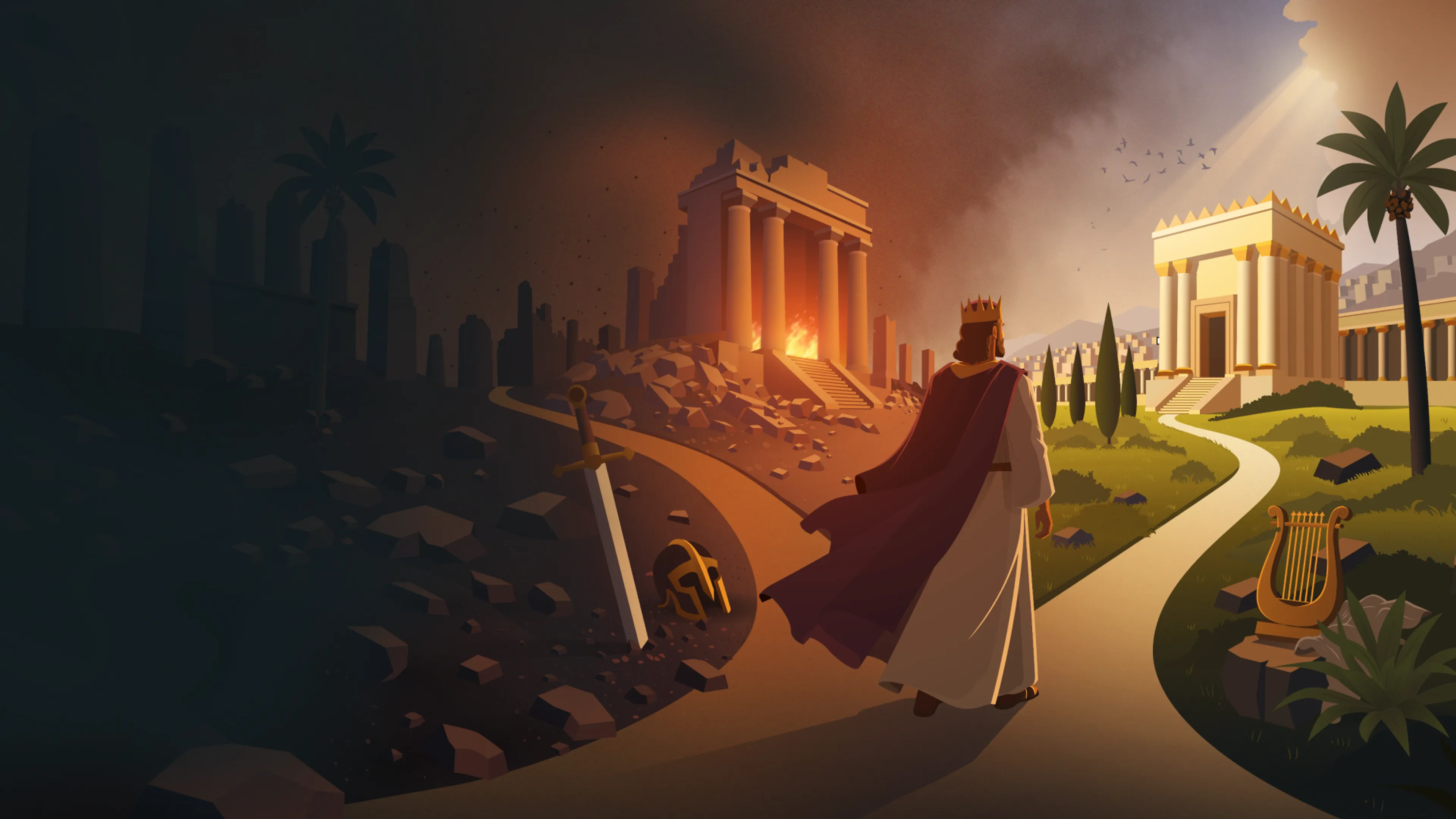
Reading the Book of Lamentations is overwhelming, to say the least. It plunges us into a world where God's fury towards the Jewish People for their sins is starkly evident. Eicha’s scenes of destruction are vividly graphic, and the themes of remorse are distressingly clear. But is it all doom and gloom? Actually, no. Nestled between the lamentations are genuine signs of hope. Jeremiah isn’t blind to the truth; he acknowledges that just as God can destroy, He can rebuild and forgive. The Book of Lamentations presents us with a dual ending—a fascinating detail—with one part expressing hope and the other despair.
The Book of Lamentations challenges us to hold these dual truths in tension, to linger in this liminal space, and to recognize the delicate balance within its verses, and by extension, the day of Tisha B’Av itself.
See the Book of Lamentations in a new light this year – join Rabbi Fohrman as he delves deeper into Eicha’s profound significance in this animated Tisha B’Av course, “Megillat Eicha and Its Secrets”.
Connecting to Megillat Eicha
To understand the mournful cry of Eicha, Rabbi Fohrman traces an echo in its opening words - an echo that takes us back to the beginning of Genesis, and reframes what Megillah Eicha is truly lamenting.


Go Deeper: More Inspiring Videos for Tisha B'Av
To deepen your understanding of this idea, Aleph Beta offers thought-provoking videos that explore Tisha B’Avs dual themes of tragedy and hope:
“Shir HaMa’alot: What Does It Mean To Plant With Tears?”: This study of Psalm 126 offers a new way of thinking about where our tears come from and what they might accomplish.
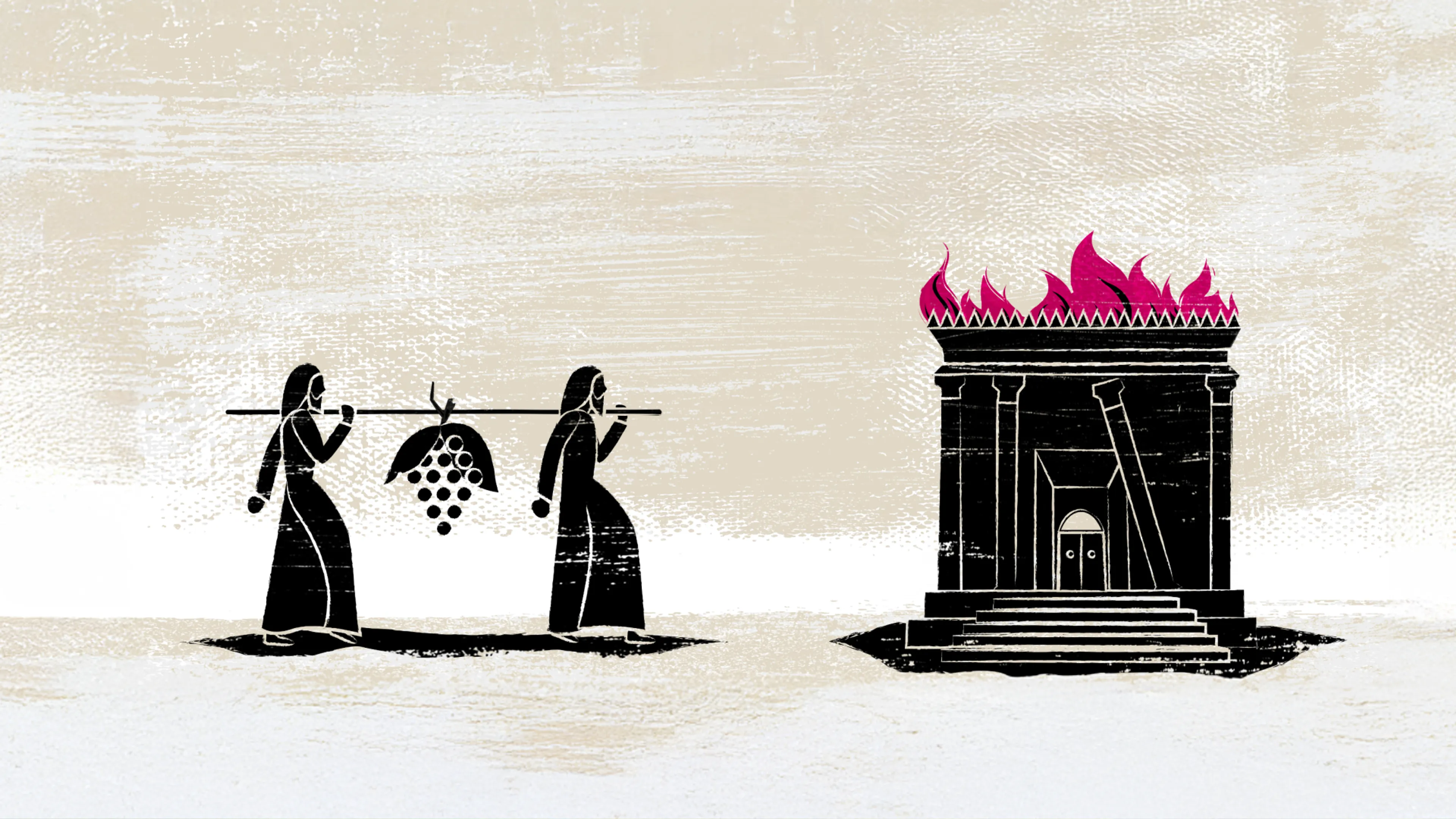
“The Power of Rachel’s Tears”: This study of the story of the matriarchs Rachel and Leah suggests that while crying on Tisha B’Av might be a starting point, it’s far from the end goal; there’s something else that God desires from us on this day.
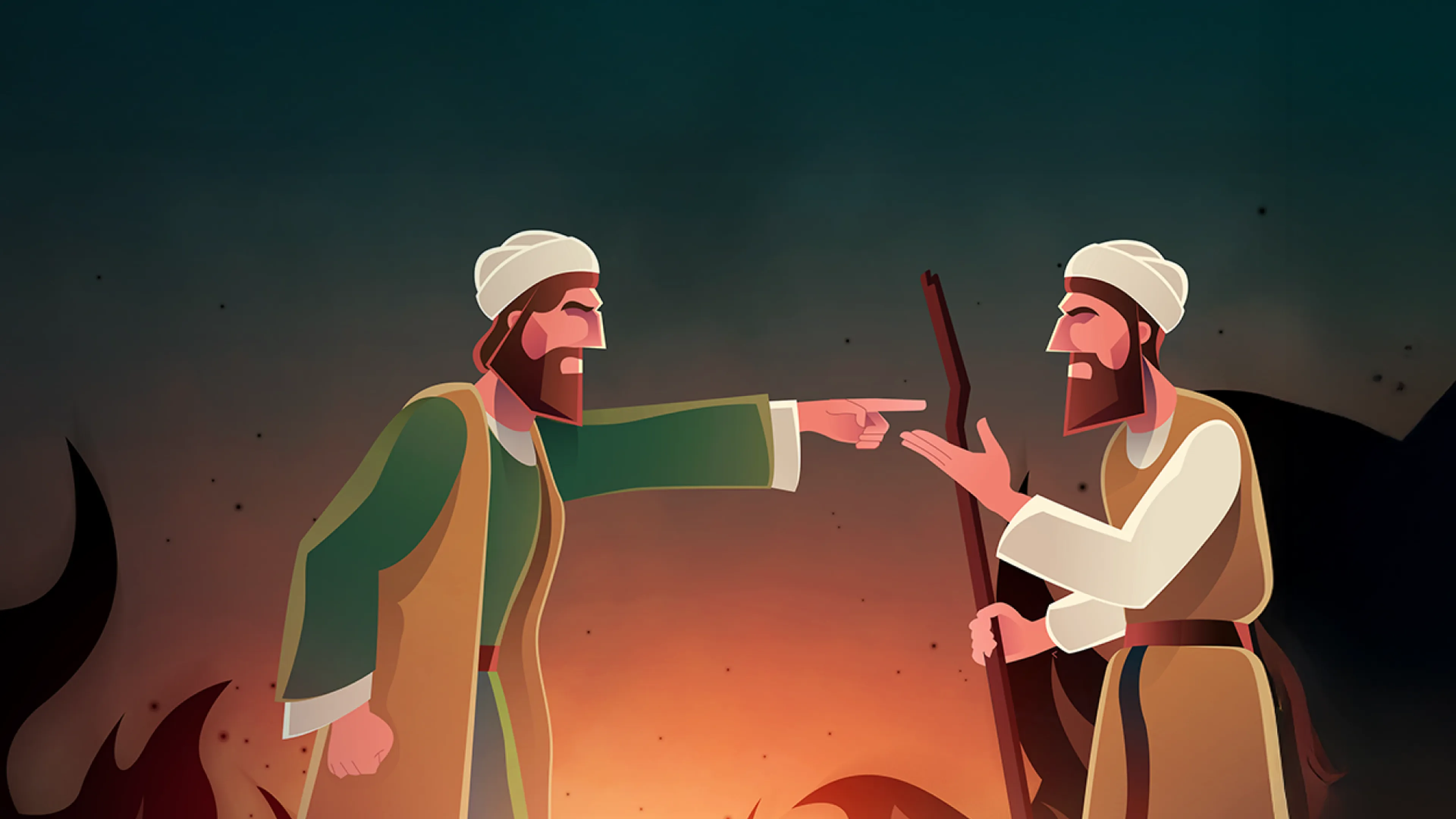
“Kamtza and Bar Kamtza: What is Baseless Hatred, Anyway?”: In this video, Rabbi Fohrman explores the Talmud's idea from Yoma 9b that what God desires most from us on Tisha B’Av is to stop sinat chinam (baseless hatred). He breaks down this term to help us finally overcome this vice in our own lives.
Browse the Whole Tisha B'Av Collection














Let us introduce ourselves
Not just a bunch of videos — a different relationship with Torah



Rabbi Fohrman
Our lead scholar
Rabbi David Fohrman is the founder and lead scholar at Aleph Beta. Over the last two decades, he’s pioneered a way of reading Biblical text that feels both rigorous and revelatory. Through Aleph Beta, he’s given expression to that, developing what is now a vast library of content, spanning all types of media: animated videos, podcasts and books. He’s also embarked on an effort to train a team of Torah scholars adept at the close-reading methodology he’s pioneered – and their work can be found at Aleph Beta, too.
Prior to his founding of Aleph Beta, Rabbi Fohrman served as a senior editor and writer for the ArtScroll Talmud Project. He also taught Biblical themes as adjunct faculty at Johns Hopkins University, where he had earlier received a Master’s degree in Western intellectual history. Rabbi Fohrman received his rabbinical and Talmudic training at the Ner Israel Rabbinical College, but some of his earliest and most profound exposure to Biblical text analysis came from his encounters with Rabbi Yosef Leibowitz, in his childhood years in Northern California.
It doesn’t end with the fast
Tisha B’Av brought you here. Membership will get you through the year.
This one day might have brought you to Aleph Beta — but there’s so much more waiting for you to discover. Close, beautiful readings of the text, ready for every Shabbos and every chag. Designed to fit seamlessly into your life.




Show up to Shabbos with something to say
Walk into the meal with a fresh insight on the parsha — the kind that makes the table lean in.

Walk into every holiday prepared
Seder prep, Megillah, the Yamim Noraim, Tisha B'Av — arrive spiritually ready instead of scrambling.

Ask the hard questions — and find real answers
The troubling stories, the never-ending lists of names. Read God's book cover to cover without skipping the "boring" parts or avoiding the challenging ones.
support the mission. get everything.
Choose a plan
Subscriptions renew automatically. Cancel anytime.
Aleph Beta is free for anyone who can't afford it. Request a scholarship.
Already a member? Log in

And it all fits in your pocket
Learn on the train, in the kitchen, on a walk — the whole library in the Aleph Beta app.


Why do you charge for Torah?
Well...Aleph Beta is a nonprofit. But we don’t do a lot of fundraising — no galas, no appeals, no ads. Instead, we turn to you, the people we actually serve, and ask for your partnership. So don’t think of membership as a fee. Think of it as a small monthly donation to support the scholars, editors and animators who make this Torah. That said, money should never be the reason you can’t learn. If the price is a barrier — for any reason, in any season of life — Aleph Beta is free for you. No application essay, no proof, no awkward conversation.
Those who can, carry those who can’t.
it’s genuinely no problem
“I have not come across an organization that treats its members with such kindness. Thank you from the bottom of my heart.”
— SARAH, member since 2019
Don't sit with the day alone.
Join Aleph Beta, and let this Tisha B'Av actually mean something.
Cancel anytime · scholarships always available