Purim Feast Guide: 5 Ways to Make Your Purim Seudah More Meaningful
By Sarah Rashba | 6 February 2025 | 6 Minute Read
Five Key Customs to Elevate Your Purim Seudah
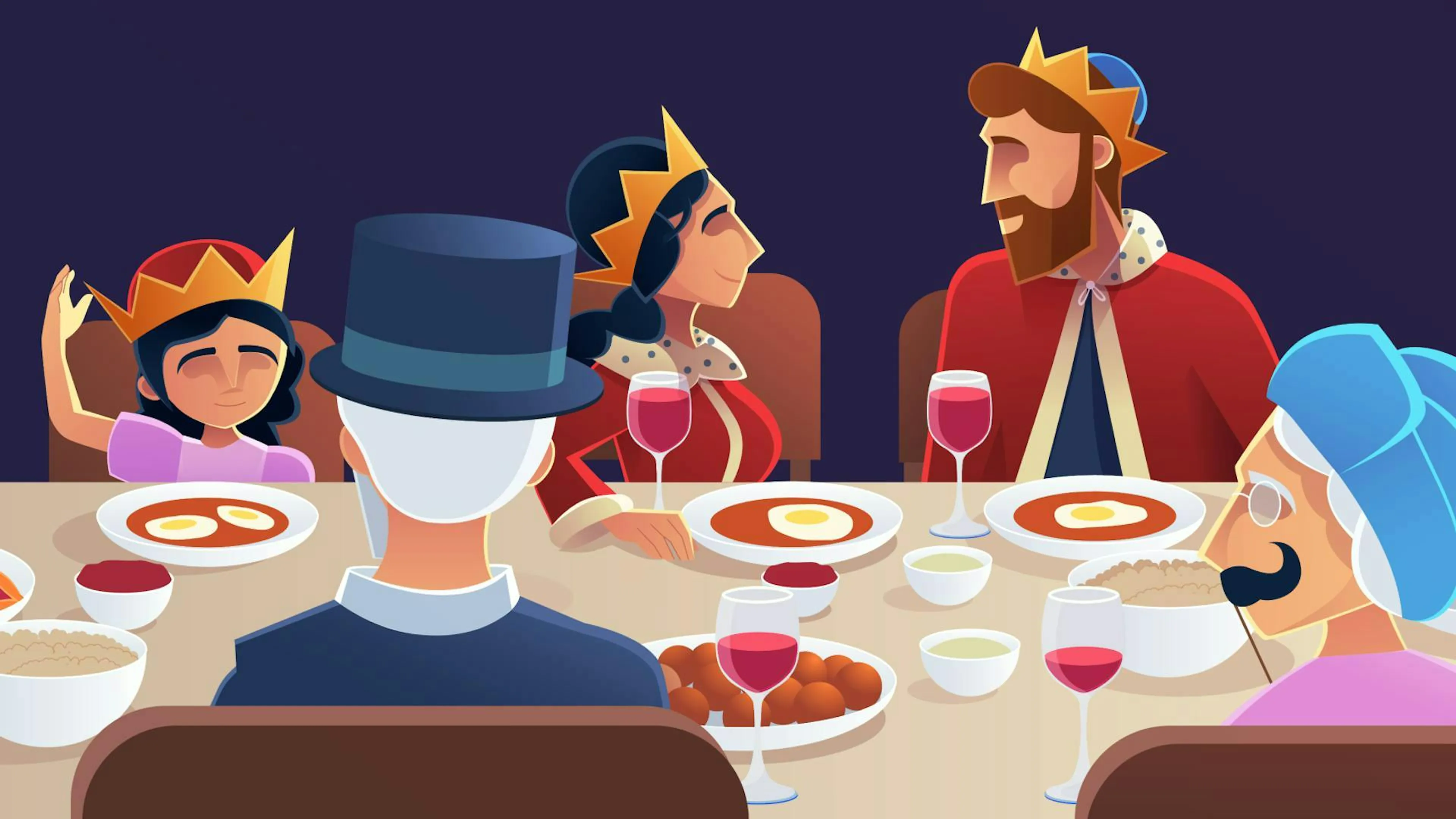
Purim isn’t just a holiday—it’s a celebration of survival, transformation, and divine hiddenness. And what better way to celebrate than with a feast? The seudah, or festive meal, is a central mitzvah of the day, turning our gratitude into something tangible: food, drink, and joy. But this isn’t just any party. The Purim feast holds deep spiritual significance, mirroring the themes of the Megillah and helping us experience Purim’s message firsthand.
Here are five key customs that can elevate your Purim seudah—and help you tap into the deeper meaning of the day.
1. Seudat Purim: More Than Just a Meal
The obligation to have a festive meal on Purim comes directly from the Megillah (Esther 9:22), which commands us to make these days "yemei mishteh v’simcha"—days of feasting and joy.
The Talmud (Megillah 7b) specifies that this feast must take place during the day, highlighting that our joy should be public, visible, and part of the daylight hours—symbolizing revelation rather than concealment.
A meaningful way to elevate your seudah:
- Begin with a D’var Torah connecting the feast to the themes of Purim.
- Use the meal as an opportunity for gratitude, acknowledging personal moments where you’ve experienced unexpected salvation.
2. Drinking Wine: A Spiritual Test?
The Talmud (Megillah 7b) famously states that one should drink on Purim "ad d’lo yada"—until they cannot distinguish between “cursed be Haman” and “blessed be Mordechai.”
Wine is a recurring motif in the Megillah—from Achashverosh’s opening party to Esther’s strategic banquets. It represents both revelation and distortion, joy and confusion. On Purim, drinking shouldn’t be about losing control but about embracing a paradox: recognizing that even in the chaos, God’s hand is at work.
But if you’d rather not serve alcohol, there are still plenty of ways to honor the spirit of this custom:
- Instead of just drinking, discuss the idea of hidden miracles—moments in your own life when things seemed random but later made sense.
- Try the custom of taking a short nap instead of drinking excessively—many say that falling asleep fulfills the mitzvah of “not knowing” just as well!
- Create a "reversal game" at your table, where people share moments when their expectations were flipped—mirroring the "v’nahafoch hu" theme of Purim.
By focusing on the deeper meaning of this custom—rather than just the act of drinking—you can fully embrace the joy and mystery of Purim in a way that fits your celebration.
3. Come in Costume: The Power of Reversal
While costumes aren’t an official mitzvah, they’ve become one of Purim’s most beloved traditions. The idea? Purim is all about hidden identities—Esther conceals her heritage, Haman misjudges his fate, and God’s presence is veiled throughout the story.
The Levush (Rabbi Mordechai Yaffe, 16th century) connects costumes to the phrase “v’nahafoch hu”—“and it was turned upside down” (Esther 9:1), highlighting the topsy-turvy nature of the holiday. Meanwhile, Rabbi Yitzchak Weiss (Siach Yitzchak) ties it to the theme of divine concealment: God may not be named in the Megillah, but He orchestrates every detail behind the scenes.
A meaningful way to elevate your seudah:
- Invite guests to dress up with intention—as a character from the Megillah, or even as a personal hero.
- Take time to reflect: What “masks” do we wear in our own lives? When do we hide parts of our identity?
4. Traditional Purim Foods: More Than Just a Snack
Food on Purim isn’t just about indulgence—it’s symbolic. Many classic Purim dishes reflect the hidden miracles of the Megillah.
- Hamantaschen (Oznei Haman): The triangular pastries, traditionally filled with poppy seeds, are said to represent Haman’s hat, ears, or even pockets—reminders that his wicked plans were ultimately turned upside down. The hidden filling mirrors how God’s miracles in the Purim story were concealed.
- Kreplach: These meat-filled dumplings also embody the idea of hiddenness—just as Esther’s true identity was hidden until the right moment.
- Bean soup (Sephardic custom): Some say Queen Esther maintained a vegetarian diet in the palace to keep kosher, making lentils and beans a Purim staple.
A meaningful way to elevate your seudah:
- Share the symbolism of each food with your guests.
- Consider serving foods that highlight the theme of hiddenness—dishes with surprises inside!
5. Purim Torah: Joyful Learning
Purim is when playful, humorous Torah study is encouraged. This custom reflects the spirit of the day, when seriousness is flipped on its head. Throughout the day, many share in Purim Torah, where traditional texts are studied with parody and wit, a reminder that even sacred learning can be filled with joy.
A meaningful way to elevate your seudah:
- Have guests prepare Purim-themed divrei Torah—bonus points if they include humor!
- Try a "Purim Pilpul"—take an absurd question about the Megillah and debate it Talmud-style.
What is Aleph Beta?
Aleph Beta is a unique kind of Torah library. Led by our founder, Rabbi David Fohrman, we are dedicated to high-level, textual Torah learning for adults that is intellectually and spiritually sophisticated, that enlivens your Jewish practice and helps you forge a deeper connection to God. Whether you’ve been learning in yeshiva for years or you’re just beginning your Torah journey, you’re sure to find something meaningful and surprising waiting for you here.
Browse our library of over 1,000 beautifully produced animated videos, podcasts, deep dive courses, and printable guides. Topics include the weekly parsha, Jewish holidays & fast days, laws & mitzvot, prayers, relationships, big philosophical ideas and more. Have something to say at the Shabbos table that will amaze your family and guests and bring deep meaning into their lives.